Motley Family – From Elm Hall Plantation to Chicago Monday, May 20 2013 

mending_socks

Emily Sims Motley as depicted by her grandson, Archibald John Motley, Jr., in Mending Socks.

The Motley family of Chicago has made more than its fair share of contributions to African American culture. The family includes Archibald Motley, Jr., a renowned painter of the Harlem Renaissance era; Willard Motley, a novelist; and Archibald “Archie” Motley, Jr., a pioneering African-American archivist. Many of this famous family’s followers associate them with the Crescent City, and while Archibald J. Motley, Jr., was born in New Orleans, the family hails from the sugar-cane growing region of Assumption Parish along Bayou Lafourche.

Archibald John Motley, Jr., one of the greatest colored portraitists and a major contributor to the body of black art. His works deal with variety in skin tone, nightlife, and the jazz scene. He was born in New Orleans on 7 October 1891 to Archibald Motley and Mary Huff. His mother was from Plaquemine in Iberville Parish. His father was born about 1863 on Elm Hall Plantation to Archibald Motley and Emily Sims. Willard Motley, the novelist who was famous for his 1947 Knock on Any Door, was born to Florence Motley, Archibald J. Motley’s older sister, yet he was reared by his maternal grandparents. Willard and Archibald regarded each other as brothers Shown above is a beautiful painting Archibald Motley created of his grandmother, Emily Sims Motley.

motley knock on any door

Willard Motley shown on the cover of his book Knock on Any Door.

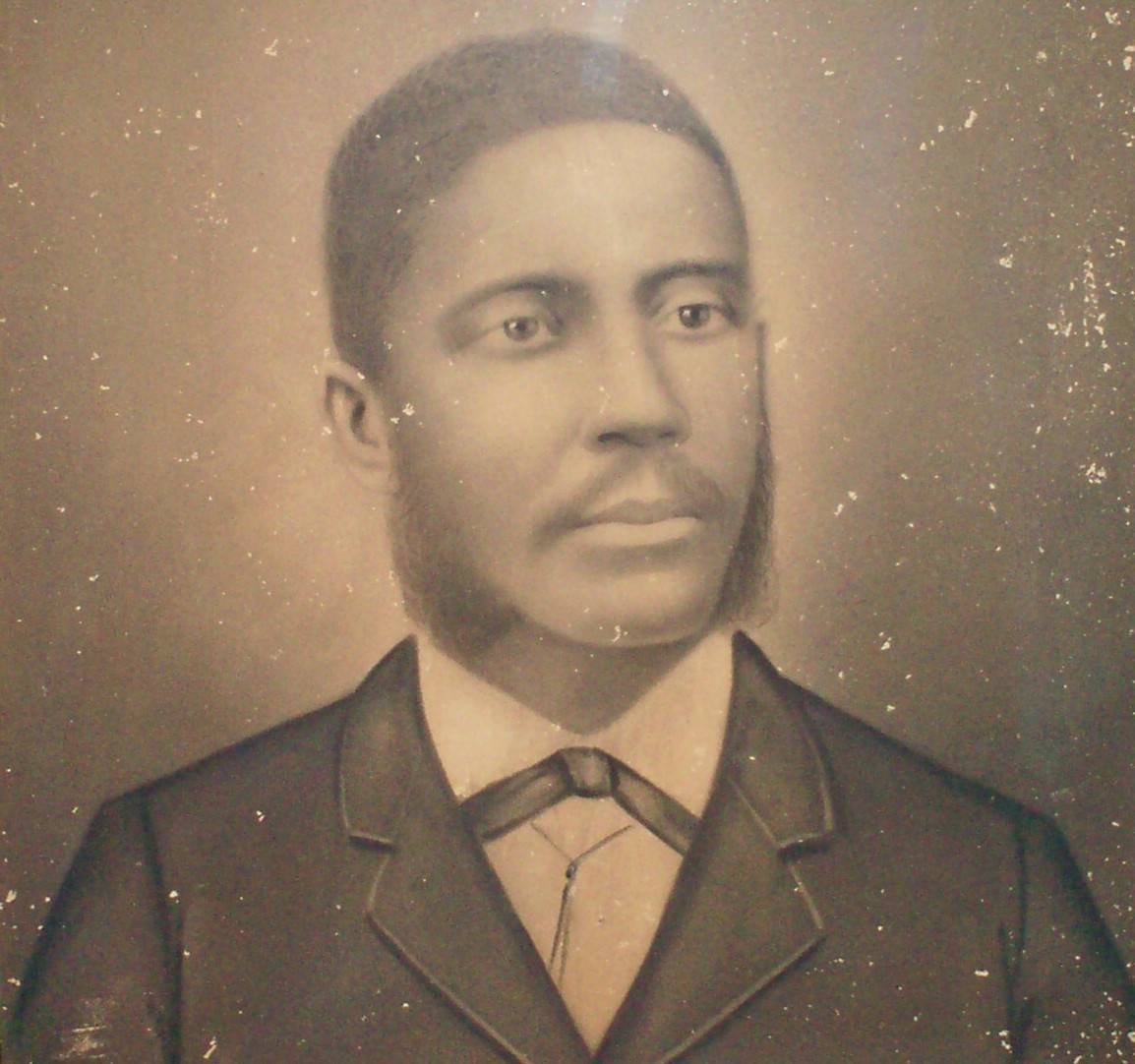
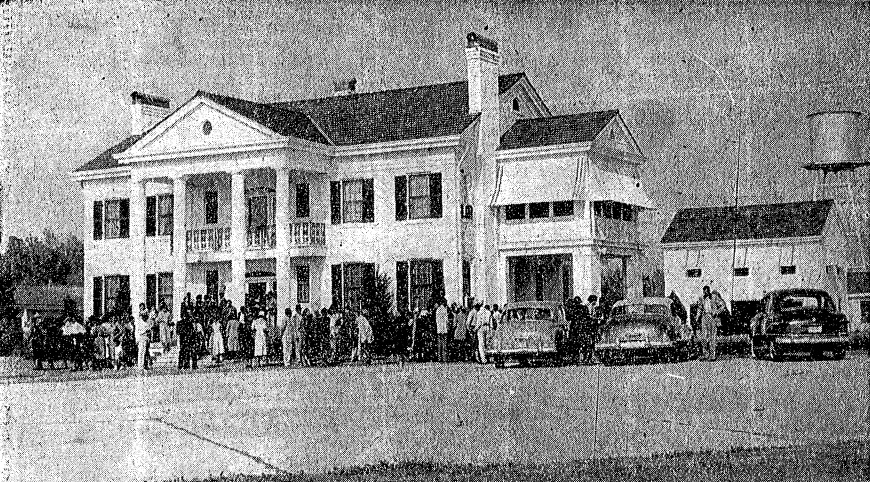
Archibald’s grandfather and Willard’s great-grandfather, Archibald Motley was born about 1843 in Kentucky. Along with his wife, Emily, his mother, Frances, his brothers Reuben and James “Jim,” and their wives, Christina “Chrissie” and Charlotte, respectively, they were enslaved on the Elm Hall Plantation just north of the town of Napoleonville in Assumption Parish. Elm Hall, which was beautifully captured in 1859 by the artist Marie-Adrien Persac, was owned by Dr. Ebenezer Eaton Kittredge.

Kittredge_Elm_Hall_Rhodes_1864_4 (2)

As an example of the records which can be found in the National Archives, shown above is a labor contract executed by Dr. Kittredge with the ex-slaves on his plantation dated 4 February 1864. Named in the contract are Archibald “Archie,” Reuben, and James “Jim” Motley, their mother, and their wives. Labor contracts like the one presented were negotiated by agents of the Bureau of Refugees, Freedmen, and Abandoned Lands, better known as the Freedmen’s Bureau. As with the Motleys, these records are often the first times that previously enslaved individuals are listed with surnames. They are also quite revelatory about the post-Civil War period, when the system of sharecropping all but replaced the slave labor of antebellum days.


This post has many ties to the author’s family. The author’s cousin, Theodore Pierce of Madison, Wisconsin, was a close friend of Willard Motley, exchanging over one thousand extant pages of correspondence during the course of their long friendship. Motley was often a guest in the home of Theodore’s father, Samuel Pierce. The author’s great-great-great-great-grandparents, Monroe James Rhodes and Malvina Johnson Rhodes, were enslaved on Elm Hall Plantation alongside the Motleys. As recently as 1910, when his great-grandmother, Mamie Alexander Honora, was born, his ancestors lived on Elm Hall Plantation.


Sources: Records of the Field Offices for the State of Louisiana, Bureau of Refugees, Freedmen, and Abandoned Lands (RG 105, Reel 40), Labor Contracts, Ascension and Assumption Parishes 1864-1868.

J.C.L.H.

The Closing of The Barn’s Doors 1937-2013 Sunday, May 19 2013 

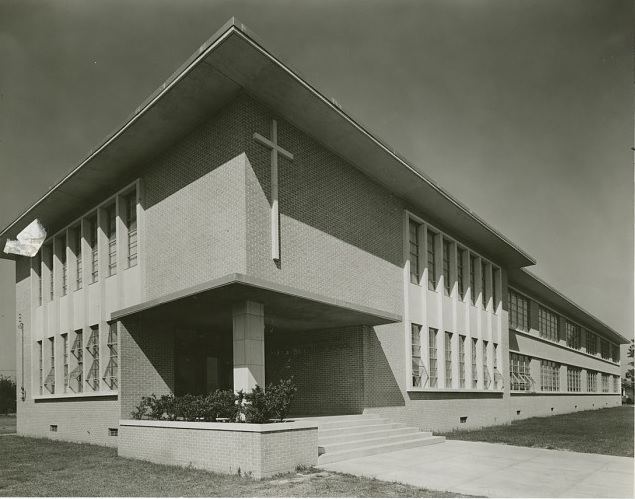
The Barn 3On Thursday of this week (May 16, 2013) we stood on Xavier University’s Campus and watched the wrecking balls dismantle a building so dear to the hearts of many of our readers. The Barn, as it has been called, will be no more. Its doors closed in July of 2011. It has sat in silence since then, but met its final fate this past week.

In an article for the Clarion Herald (7/20/2011), Ron Brocato writes, “Xavier University’s 74-year-old basketball palace is considered by many one of the city’s forgotten treasures that will never take its place among the landmarks in New Orleans’ registry of historic icons. Instead it will soon succumb to the claws of progress and crumble back to the earth from which it sprang.”

Let’s take a short look back in time

The Gym Under Cnstruction

It all began on Tuesday, November 2,1937 at a dedication ceremony for the new $47,000 gymnasium opening for use on the rapidly-growing campus of Xavier University. The dedication exercises began with an impressive procession from the main building on campus to the gymnasium. Xavier’s band, chorus, student body and faculty led the way and was followed by the Most Reverend Joseph Francis Rummel, Archbishop of New Orleans.

In his address, the Archbishop stressed the advantage of a well-rounded education (spiritually, physically, intellectually) and dedicated the building to the athletic and social enjoyment of the student body and friends of Xavier. After the ceremonies had been completed, a social for the students was given in the gymnasium. Music was furnished by Allegretto Alexander and his Xavier Swing Band, the hit band sensation of the season.

The building (shown above) was meant to be temporary in construction, but it remained as the permanent structure with two wings eventually being added in order to accommodate its growing needs.

Whether dancing to the swinging sounds of the forties and fifties, the rock and roll of the fifties and sixties, or the disco of the seventies; the sounds of polished loafers and saddle-oxfords will never again be heard across The Barn’s floor.

As a basketball facility, the building has also left its mark on history. The 1942-43 team included 6-foot-8 Nathaniel “Sweetwater” Clifton. After serving in the Army during World War II following his graduation, Clifton played two years with the Harlem Globetrotters before becoming one of the first African Americans to be signed to an NBA contract with the New York Knicks. Xavier’s men won 50 straight games in the early 1970s while Xavier’s women topped that by winning 51 in a row in the late 1990s.

The Barn became a building where many alumni have returned over the years to reflect on their time spent at Xavier and as a place that many hate to see destroyed, but The Barn is no longer able to meet the needs of a contemporary university.

Convocation Center

The 4,500 seat multipurpose facility, known as the Convocation Center, has now replaced the 1,300 seat gymnasium of yesteryear. Located across Washington Avenue, near the main campus, it was dedicated on November 3, 2012. It now houses the athletic programs as well as other large-scale events. Events that could never be held in The Barn. The old has to give way to the new if we are to progress, but the memories of The Barn will always remain with us.

Sources:  Xavier University Archives : photo of The Barn from 1937 and copy of The [Xavier] Herald 1937; The Clarion Herald, 20 July 2011 article written by Ron Brocato; http://www.xula.edu/athelics/cac.

L.V.C.

New Orleans Welcomes Fraternal Leader – Grand Exalted Ruler of the Elks – 1933 Saturday, May 11 2013 

J Finley Wilson

James Finley Wilson – Grand Exalted Ruler, Improved Benevolent Protective Order of Elks of the World

The colored population of New Orleans rolled out its red carpet on June 12th and 13th, 1933, when J. Finley Wilson, Grand Exalted Ruler of the Improved Benevolent Protective Order of Elks of the World came to the city on a whirlwind tour. The international leader’s day and a half in the city was filled with activities and displays of good will from his antlered brothers and sisters and the general population. The chairmen of the committee which arranged the visit were William T. Meade Grant, Jr., State Deputy of Louisiana and Morris A. Lewis, Past Exalted Ruler of the Winter Capitol Lodge No. 595 and Third Vice-President of the Louisiana State Association, I.B.P.O.E.W. Both Grant and Lewis were educators in the public schools of New Orleans.

William T. Meade Grant, Jr.

William T. Meade Grant, Jr. – State Deputy of Louisiana, IBPOEW

Leader of Planning Committee for the Visit of the Grand Exalted Ruler

The Grand Exalted Ruler arrived in the city early on Monday morning, June 12, by way of the Crescent Limited train. He was met at the Louisville and Nashville Depot by a throng of Elks and the band of the Thomy Lafon School. He was motored down Canal Street with a police escort where hundreds lined the sidewalks leading to the Astoria Hotel on Rampart Street where he was to be tendered a breakfast. The breakfast was attended by many of the city’s colored leaders and held in the Red Room of the Astoria Hotel. He was later the guest of honor at a luncheon given by the local Elks at the Magnolia Restaurant on Magnolia Street, which was owned by “Elk” Charles Armstead.

In the afternoon on Monday, June 12, the Grand Exalted Ruler organized a large group of young men, including the embers of the Lafon school band, into a unit of Junior Elks. His presence was an inspiration to the young members of the antlered herd. Following the junior initiation, he organized the first Civil Liberties Unit in New Orleans. That unit was the division of the IBPOEW dedicated to fighting for civil rights and social justice. Wilson gave passionate remarks stressing the need for that sort of work among within the colored community.

In his remarks, he decried the Negro people as being too contented with their circumstances and too reliant upon Providence. He said that he did not believe in “giving the white man all of this world and contenting himself with Jesus.” He too wants some of this world, the speaker continued. He paid tribute during his remarks to John Brown whom he noted was not afraid to act upon his convictions that liberty should be assured to the Negro.

Morris A. Lewis - Claver

Morris A. Lewis – Past Exalted Ruler & Treasurer, Winter Capitol Lodge; Third Vice-President, Louisiana State Association, IBPOEW

Leader of Planning Committee for the Visit of the Grand Exalted Ruler

That evening, an overflow crowd filled the auditorium of Xavier University where Wilson was the featured speaker. He spoke about the state of the Negro people, noting that the black man would be able to better withstand the economic depression. As he observed, “The white man has always had a pay day, whereas the black man has always been put on short rations.”

On Tuesday morning before his departure, Wilson was treated to a breakfast at the office of the Universal Life Insurance Company, the manager of which was his friend, C. C. Valle.

The Improved Benevolent Protective Order of the Elks of the World (IBPOEW) currently boasts nearly 500,000 members in nearly 1,500 lodges worldwide. The IBPOEW is the largest black fraternal organization in the world. Its purpose is “that the welfare and happiness of its members be promoted and enhanced, that nobleness of soul and goodness of heart be cultivated, that the principles or Charity, Justice, Brotherly/Sisterly Love and Fidelity be inculcated, that its members and their families be assisted and protected, and that the spirit of patriotism be enlivened and exalted.” The “colored” Elks or “Black” Elks as they have been called were founded upon the same principles and symbolism as the Benevolent Protective Order of Elks (white) which was founded in New York in 1868. The Elks emerged out of a fraternal benevolent society, comprised mostly of actors who felt their society should be expanded and should adopt the name of a strong native North American animal. Thirty years after its founding, in 1898, a colored railroad porter named Arthur Riggs and a colored attorney named Benjamin Franklin Howard worked together to found a separate yet similar order for colored men. The IBPOEW have maintained and in many cases maintain to this day many distinct customs such as the prominent representations of the elk, the Elks’ Rest section in cemeteries, the traditional greeting “Hello Bill,” and one of the most beautiful, the eleven o’clock toast to deceased and absent members.

The antlered herd of New Orleans gave a fine toast to their Grand Exalted Ruler in preparing a wonderful series of events during his visit to the Crescent City.

Source: The Louisiana Weekly, 10 June 1933, page 1; 17 June 1933, pages 1, 3, 7.

J.C.L.H.

The Moret Press 1932-2005 Saturday, May 11 2013 

Adolph Moret

Adolph Joseph Moret (1893-1996)

Adolph Joseph Moret was the perfect example of a self-made man. From a boy of sixteen years who entered the printing trade as a neophyte to the owner of a successful printing company, his life’s story is marked by tenacity and determination. He was born on 25 October 1893 to Professor Joseph Adolph Moret and Georgiana Bordenave. His father was a music teacher who taught many of the pioneers of Jazz.

In the spring of 1910, young Adolph was a freshman in high school at the Southern University on Magazine Street. Sickness in the family and subsequently finances forced him to leave school after his first year. He took a job with the Daily Court Record at 538 Saint Peter Street in one of the Pontalba Buildings. As the name of the press implies, their principle project was printing briefs and other documents for the nearby courthouse. Adolph learned every aspect of the business – delivering the papers to various offices, picking up the orders at the courthouse, and spending hours setting the type by hand. He remained at the Daily Court Record until 1913, having spent a few summers as a steward on commercial ships to Central America and a few months working in a printing plant in Chicago.

He obtained a job with the Steeg Printing Company, one of the largest printing plants in the city. At the time, the Steeg Company printed the telephone directory, a very large project. While employed at Steeg’s, Adolph married Miss Georgiana Josephine Perez on 24 June 1916. They were blessed with five sons: Adolph Jr., Alexander, Edgar, Calvin, and Roy.

After eighteen years at Steeg, the Great Depression brought a reduction in work hours. It was then in January 1932, that Adolph Moret decided to begin his own printing company. With an initial investment of two hundred dollars, Moret opened his business in the garage in his backyard. Business was good – Mr. Moret had a steady stream of orders from benevolent societies, clubs, churches, fraternal organizations, schools, and businesses. He eventually outgrew his humble first shop in his garage and erected a spacious building of over one-thousand square feet which housed all of the necessary apparatus. Prior to December 1949, practically all of the type was still set by hand. At that time, Mr. Moret invested in a linotype machine which sped the composition process tremendously. Over time, additional equipment such as a large cylinder press and Miehle Vertical press were added.

As they came of age, Mr. Moret’s sons, Calvin and Roy, entered the business as partners. The business continued for seventy-three years until destroyed by Hurricane Katrina. With each advancement in the printing field, The Moret Press acquired and utilized the new technology. Adolph Joseph Moret died on 2 February 1996 at one-hundred and two years of age. He lived to see his son, Calvin G. Moret emerge as the head of The Moret Press. An accomplished man in his own right, Calvin Moret possesses many talents and is the last surviving Tuskegee Airman in the New Orleans area. In its near three quarters of existence, The Moret Press did little advertising, relying simply on its record of providing “Reliable Printing Service.”

Sources: The Moret Mirror 11:2 (June 1960), 1, 4. “25 Years of Reliable Printing Service – January 1, 1932-1957: The Moret Press” in Christopher P. West Papers, Amistad Research Center.

J.C.L.H.

Plantation Regulations Friday, May 10 2013 

The Black Republican was a weekly newspaper published in the English language in New Orleans, Louisiana from 1865 until an unknown date in the 1860s (most likely 1866). It was also known as the Weekly Black Republican.

Informational ads were an integral part of this newspaper published after the Civil War to ensure that pertinent, timely information was brought to the “colored” population.  It is interesting and helpful to step back in time to understand the climate in which our ancestors were living and how specific laws and regulations impacted their lives. For instance, there were “Plantation Regulations” issued by the Headquarters Dept. of the Gulf, in New Orleans, March 11, 1865 to wit:

“The Regulations heretofore published by Mr. W.P. Mellen, General Agent, Treasury Department in relation to Freedmen and labor, not having been recognized by the Secretary of the Treasury, the following orders are prescribed for the hiring and government of laborers within the State of Louisiana.”

The article goes on to give orders about the “Home Colonies,” an interesting post-Civil War economic construction.

Plantation Regulations 1 4.29.1865

The structure of Home Colonies is interesting and can yield valuable information. “After the Civil War, a major task faced by the Bureau of Refugees, Freedmen, and Abandoned Lands was to help newly freed slaves adjust to their new lives. In Louisiana, the field office there established four “home colonies,” self-sustaining agricultural collectives that also provided schools, commercial stores, and a hospital. These colonies, the brainchild of the assistant commissioner of the Louisiana field office, Rev. Thomas Conway, were meant to be safe havens for persecuted freedmen as well as sites for training and educating them with the necessary skills for survival in post-Civil War Louisiana.

The Rost Colony in St. Charles Parish was by far the most successful of the four. The other three colonies, McHatton Colony near Baton Rouge, the Sparks Plantation in Jefferson Parish, and the Bragg Plantation in Lafourche Parish, never financially broke even as the Rost Colony did. The reasons for their lack of viability range from earlier claims by former owners for the return of the plantations to their lack of adequate medical and support facilities. Although the Rost Home Colony existed for only two years (1865 – 1866), the records created for tracking the lives of those freedmen fortunate enough to take advantage of its services have left genealogists with an invaluable resource. [The article written by Michael F. Knight (see Sources below)] examines the information found in the ‘Registers of Arrivals and Departures of Freedmen at the Rost Home Colony’ in the Records of the Bureau of Refugees, Freedmen, and Abandoned Lands, Field Office Records for Louisiana (Record Group 105).

The two-volume register lists the names of freedmen laborers and heads of households at the colony, the names of their family members who accompanied them, the sex and age of each individual, date of arrival at the colony, and date of departure and destination. Also listed are the individual’s (or family’s) place of origin, former owner’s name, former occupation, familial connections to other groups or individual freedmen who arrived at a different date, and lists of subsistence stores (clothing, food, farming equipment) distributed to them. The register also contains assessments of the person’s physical or mental well being and general remarks further describing [him or her].

The Louisiana field office of the Freedmen’s Bureau divided the state into seven districts. Each district consisted of one to three parishes supervised by an individual with the cumbersome title of assistant sub-assistant commissioner (most often referred to simply as agents). The first agents assigned in 1865 were almost exclusively former Federal army officers who had served in the Civil War or active army officers. Between late 1865 and 1868, many of these officers mustered out of the service or returned to their original homes and were replaced by civilians deemed ‘of high moral character and organizational skills.’ Commissioner Howard and his headquarters officers were given nearly complete autonomy by Congress to create policy for the Freedmen’s Bureau. In turn, the assistant commissioners were given wide discretion to set field policies and administer their state operations.

The first assistant commissioner in Louisiana, Rev. Thomas Conway, used this power with great zeal. During the war, Conway had recruited black troops and supervised Negro laborers in Louisiana. In his brief role as assistant commissioner for the state, he pursued aggressive policies that proved extremely unpopular among whites in the volatile environment of postwar Louisiana. He circumvented the state’s newly reconstituted legal system by setting up special courts to hear cases of freedmen’s complaints, and he aggressively appropriated the property of former Confederate officers and politicians for bureau use. Conway directed that these confiscated lands specifically be used for the betterment of the freedmen’s conditions.

Judge Pierre A. Rost had been a high court judge in antebellum Louisiana before offering his services as an administrator to the Confederate government in 1861. He was assigned as the Confederate representative, or ambassador, to Spain for most of the war. On Conway’s orders, the Louisiana Freedmen’s Bureau seized Judge Rost’s house in New Orleans and converted it into two schools for orphaned colored children.

The bureau also seized two plantation properties belonging to Judge Rost. One of these plantations was the Rost/Destrehan Plantation in St. Charles Parish. The bureau designated this plantation as one of four “home colonies” in Louisiana for the protection and care of freedmen and indigent refugees.

For those who have no concept of the skill level of former enslaved people, section 6 in the Plantation Regulations article lets us see the intelligence and skills of the freedmen where it says “Engineers, foremen and mechanics will be allowed to make their own contracts…”

Plantation Regulations 2 4.29.1865

This is activity that many of us are unaware occurred after the Civil War and should help broaden our understanding of the times in which our ancestors lived.

L.A.G.

Sources: Black Republican, 29 April 1865, pg. 2; archives.gov, Prologue Magazine, Fall 2001, Vol. 33, No. 3, “The Rost Home Colony, St. Charles Parish, Louisiana,” By Michael F. Knight.

Alex Herman of Mobile (1899-1975) Tuesday, May 7 2013 

Alexander_Leo_Herman_Claver 

In our great democracy, few men can lay claim to both election to public office and selection to reign as king, but so could boast Alexander Leo Herman, a well-known figure in the Bay City of Mobile. “Alex” as he was more commonly called was an insurance official, civic leader, and the first man of color elected to public office in Alabama outside of Reconstruction.

Alexander Leo Herman was born in Mobile on 10 May 1899 to George Xavier Herman and Mary Alice Shepard. He was baptized on 13 September 1899 at Saint Patrick’s Church in Mobile. On his paternal side, he was descended from the Laurents, Chastangs and Bernoudys, three of the oldest families in Mobile. His father’s father like his mother’s father was a native of Germany.

One of ten children, eight of whom lived to adulthood, Alex like all of his siblings had the benefit of a university education. He attended the Tuskegee Institute for a time, gaining a reputation in his young years as an excellent baseball player. He worked in his father’s bakery along with his brother George X. Herman, Jr. He played baseball professionally and for a time was a manager and part-owner of the Mobile Braves team, the star player of which was Satchel Page.

In 1928, Alex began what would be a forty-seven year career with the Unity Burial ad Life Insurance Company. For forty-two of those years he served as president of the company. Unity was one of the largest colored insurance companies in the South. He was very active in the Democratic Party in Alabama and was elected the first colored member of the Mobile County Democratic Committee. He actively encouraged voting and engagement in the democratic process among his people.

He engaged in a number of civic and social organizations, serving on the Board of Trustees of the Mobile Branch of the National Association for the Advancement of Colored People. He was also an active supporter of the Colored Y.M.C.A. In 1940, he helped to found the Mobile Area Mardi Gras Association, the oldest surviving black Carnival association in Mobile. He reigned as the first King Elexis during that same year, the regnal name of the monarch being an adaptation of his own name.

Alex Herman also served for many years as Exalted Ruler of the Gulf City Lodge No. 244 of the Improved Benevolent Protective Order of Elks of the World. He was a member of Mobile Council No. 1 and George L. Rieras Grand Assembly No. 1 of the Knights of Peter Claver. He served as District Deputy of the Gulf Coast and National Treasurer of the Knights of Peter Claver. He was also a charter member of the Original Utopia Social Club. He was a dedicated parishioner of Most Pure Heart of Mary Church and a member of its Holy Name Society. Alexander Leo Herman died on 13 December 1975 at the age of seventy-six years in his native Mobile.

Alex Herman had one son, Kirk Herman, and one daughter, Alexis Marguerite Herman. Alexis Herman, quite distinguished in her own right, served as United States Secretary of Labor during the administration of President Bill Clinton.


Source: Mobile Press-Register, 20 December 1975; The Claverite, Winter 1975.

J.C.L.H.

The Stranger Within Our Gates – Dennis I. Imbert Monday, May 6 2013 

IMG_0372

Dennis Ignatius Imbert (1869-1947)

With its Latin spirit, New Orleans has always laid claim to the title “Gateway to the Americas.” Long before Mayor Chep Morrison sought to solidify that city’s ties to Latin America in the 1950s, the city had drawn migrants and refugees from below the border. The Mexican President Benito Juarez lived in exile at New Orleans in the 1850s, as did the Cuban revolutionary Antonio Maceo in the 1880s. Perhaps unknown to the vast majority of our readers is Señor Dennis Ignatius Imbert, a native of Caracas, Venezuela, who lived in New Orleans for nearly a quarter-century and left an intriguing yet little-known literary legacy. Imbert authored three fictional travel narratives, employing the genre to offer observations based upon his four decades in the United States.

Imbert was born in Venezuela’s capitol city of Caracas on 1 February 1869. If one were to scour his fictional travel narratives, the narrator and main character, like Imbert, hails from a South American capitol, is born to a prosperous colored merchant father, and in varying tales pursued either business in New York or New Orleans. The three works were all published by colored printers, The Colored Gentleman by Williams Printing Service and the other two by Watson Brothers Press. They all number between eighty and one hundred and ten pages, with the first apparently being the most popular.

In the earliest work, The Colored Gentleman: A Product of Modern Civilization (1931), the protagonist, Señor Francis Lafarge is a young attorney on an island in the British West Indies. Having spent seven years studying in England and touring Europe, he tires after spending three years in his native country. He leaves his father, sister, and sweetheart to travel to New York. In New York, he is welcomed by a business contact of his father. Lafarge observes the multitude of ethnic groups in the city, their living conditions, and social interactions among New Yorkers. He eventually moves on to New Orleans, marrying a young Creole maiden he had met during his voyage to America. He eventually marries the young woman, Juanita LeBlanc, the daughter of a French father who is an attorney and a Martiniquan mother. Lafarge makes a successful living in his father-in-law’s firm. He proves himself to have attained a high degree of “material and intellectual development.” Throughout the course of the narrative, he offers commentary upon fitness of colored population for the modern world. The book ends with a photographic section with portraits of eleven leading colored men of New Orleans and a directory listing some other men of mark. Those pictured are: Smith Wendell Green, George Labat, Emile Labat, Dr. Joseph Arthur Hardin, Joseph Patrick Geddes, Dr. Aaron Walter Brazier, Edward D. Verrett, William H. Mitchell, Dr. George W. Lucas, Raoul Joseph Llopis, and R. G. Williams. Listed are five dentists, one physician, two druggists, eight school principals, thirteen school teachers, two librarians, three insurance officials, and one attorney.

In the next work, The Stranger Within Our Gates: A South American’s Impressions of America’s Social Problems, the principal character, Domingo Lopez, engages in a similar journey. Lopez is identified as being from a particular country, Venezuela, and likewise was admitted to the bar in England. After several years in the United States, he reaches the conclusion, “After all, the United States was the best place in the world to live in.” He also asks when reflecting upon the plight of colored Americans, “Why not extend to them the privileges of citizenship?”

The final work, The Negro After the War, published in 1943, assessed the contemporary racial conditions in the United States and prescribed the actions and desires of the Negro race after the conclusion of World War II. He adequately predicted a stronger assertion of the rights assured to free people in a modern civilization.

Though Imbert presents his protagonists as Afro-Latinos, they never seem to be subject to the prejudice faced by the colored Americans in the stories. While Imbert himself enjoyed a successful career in California as a hotel manager and clerk, there is no indication that he (always identified as mulatto or negro) skirted the color line in such a manner as his characters once he settled in the South. Imbert immigrated to the United States about 1895 just at the time when Jim Crow was becoming de rigeur. Settling in California, he married a white woman from Missouri named Alta Royer on 29 September 1896 at. They had one daughter, Mabel, before they apparently separated. While Alta and their daughter continued to live in California, Imbert moved to New Orleans about. In the Crescent City, he maintained furnished rooms in a few places, worked as a bookkeeper and clerk for several years, and finally was employed by the Venus Mutual Benevolent Society Community Center. Though he moved several times, Imbert lived for the most part in the city’s either Uptown or in the French Quarter, the longest period being spent at 929 Barracks Street. Dennis Ignatius Imbert died on 19 May 1947 at seventy-eight years of age. He was buried from Saint Augustine Church and interred in Saint Mary’s Cemetery in Carrollton.

Sources: The titles mentioned above by Dennis I. Imbert; 1900, 1910, 1920, 1930, and 1940 Federal Censuses; City Directories, Times-Picayune, 20 May 1947.

J.C.L.H.

Booker T. Washington High School (1942) Friday, May 3 2013 

Booker T. Washington High School

When McDonogh # 35 opened in 1917, it not only became the first black public high school in New Orleans, but the only one of its kind for the next 25 years! The popularity and success of the school soon produced overcrowding and the need for another secondary school was evident as more and more students desired to be educated beyond the elementary/ junior high level.

Black leaders took up the cause of fighting for a second high school in New Orleans, but this time they demanded that it would be academic with a strong emphasis on vocational education. Surprisingly, both manual and domestic training were a part of the elementary and junior high schools’ curriculum (Ex: Joseph A.Craig & John Hoffman) throughout the early 1900s since children of color were expected  to go to work in the various trades after leaving school. Girls received instruction in sewing and cooking, while males in printing, carpentry, and bricklaying.

Although McD#35 was established as a preparatory school, vocational classes also became a part of its curriculum by 1927. For a number of years the manual training department of the high school as well as Hoffman Junior High made all the work desks for the whole system. The cooking department even took care of the daily lunches. Once the vocational program produced evidence that McD#35′s academic development was not hindered, black leaders began to fight for another high school which would combine academics with a greater emphasis on vocational training.  The problem was that many in the white community were afraid that a black vocational high school would threaten white jobs.

A compromise was finally reached when school board officials and teachers of color helped calm white fears by agreeing that the trades to be taught at the new high school would be exclusively those which were largely occupied by colored labor at that time. Unfortunately, after purchasing land for the site, the school board reneged on the deal and instead built another elementary school, Sylvania F. Williams.

Throughout the 1930s, the Colored Educational Alliance, the New Orleans NAACP, and the Federation of Civic Leagues kept the issue alive. When the trade school finally did come, it came not from local but from federal funding. The WPA  made the trade school a reality. The school was named after Booker T. Washington, the man who devoted his life’s energies to industrial education.

In August 1942 construction was completed on a site bordered by Erato, Prieur, South Roman and Clio Streets. By September 1942, more than 1600 students had enrolled and  Mr. Lawrence Crocker was appointed as its first principal. The first commencement was held January 28, 1943 with eleven girls and one boy. The second graduation exercise was held in June, 1943 and consisted of twenty-one girls and four boys.

In the September 19, 1942 issue of The Louisiana Weekly, students are shown attending some of the  most popular vocational classes of that year which were shoe repairing, printing and motor mechanics. The Booker T. Washington Program Book of 1947 lists also masonry, millinery art, graphic art, commercial cookery, woodwork, and mechanical drawing as courses offered to interested students.

It should be emphasized that many students at Booker T. Washington enrolled strictly in the academic program and enrolled in college upon graduation.. But the fact that students of color were now able to get professional training in a particular trade of their choice, presented students with more opportunities and prepared them for the jobs available for employment in such fields.

Shown below are the faculty members who were a part of the Vocational/ Agricultural and Industrial Educational Department of the school in 1954. They are:

Top row:   Sidney Jordan  (Horticulture),  Joseph W. Merrick, Sr. (Agriculture)

Middle Row:   Edward Alston  (General Metals),  Arsene L.Baquet, Sr. (Shoe Repair),  Maurice Martinez, Sr. (Masonry)

Bottom RowJames F. Norris (Carpentry), Henry L. Stewart, Jr. (Motor Mechanics), Mrs. Willia M. VonPhul (Graphic  Arts), Mark A. Wheeler (Mechanical Drawing)

Booker T.- Vocational,Agricultural,Industrial Education Teachers

SourcesThe Lion 1954 (B.T.W. Yearbook);  B.T.W. Program Book 1947 (Courtesy of Numa Martinez);  Devore, Donald & Logsdon, Joseph.. Crescent City Schools: Public Education in New Orleans 1841-1991; The Louisiana Weekly 19 September 1942 + 06 February 1943+ 22 February 1930. [Special thanks to Eugenia Foster Adams (graduate of B.T.W) for use of her yearbooks and personal assistance.]

L.V.C.

Crescent City Beauties (1934) Wednesday, Apr 24 2013 

Crescent City Beauties-1934

First RowLois LaBrancheAnn RandolphEdith Winand

Second Row: Marjorie DuvigneaudYvonne DeLayEdna MinorCecilia TownsendOnelia Bazanac

StandingMaxine CooperIsabella CarterMae Gagne

The pretty young ladies shown above appeared in the August 16,1935 issue of The Louisiana Weekly. Only their photos and names were given without any indication as to where it was taken or what group they were representing. If any of you have additional information, please let us know. Listed below is what we have been able to add based on preliminary research we have discovered.

Lois LaBranche  was the daughter of Emile and Gertrude LaBranche. Her father was the proprietor of  the LaBranche Drugstore. Her two younger siblings were Emile Jr. and Hernandez LaBranche. She married James Faustina in February of 1937.

Ann Randolph’s  parents were George and Annie Touchard Randolph. According to the 1940 census, she was residing on Annette Street with her mother, and Olivia Truchard, her maternal grandmother as well as Ann’s uncles, Joseph and George Truchard, both plasterers in New Orleans. She married Raymond Jules Groscrand (Groscand) in June of 1952. He passed away in 1988. Together they had one son Raymond Jr. They reside on Burthe Street in uptown New Orleans.

Edith Winand  was born to Joseph and Beatric Kelly Winand on September 18,1915. She was a graduate of St. Mary’s Academy Elementary & High Schools. She received her degree in 1936 from Xavier University. She was a supervisor for the LA State Wefare System. She married Gerald Thomas, a postal employee, and has a daughter, Glynn Thomas Gervais, who is a regular reader and commentator on our blog.

Marjorie Duvigneaud, born May 5,1915, was the daughter of Louis and Alma Williams Duvigneaud. She married Clarence Witcher and by 1940 had moved to Los Angeles, California with her husband and brother, Harold. She passed away on March 25, 1990.

Yvonne  DeLay lived at 925 North Claiborne Avenue with her parents, Joseph and Angelina DeLay. Her father was a sail maker at an awning company in New Orleans. Two older siblings, Michael and Corinne, are  at home also. Her sister, Corinne, became a public school teacher and in 1940 Yvonne is living in Montgomery, Alabama. She married William Fletcher in June of 1940.

Edna Minor was the daughter of Sidney and Annette Brown Minor. In the 1930′s she was living with her dad, grandmother (Josephine Mitchell), and several siblings on Iberville Street. By 1940 they are residing on North Roman. She became a school teacher  and taught in Buras, LA. She married  William Carter Jr. and had one son. She was very active in the Xavier University Alumni Association and was a member of several social organizations. She passed away in August of 2012.

Cecilia Townsend was one of six children born to Elmo and Octavia Townsend. She shared her childhood days with Theriot, Joan, Mary, Elmo Jr., and Louise; her brothers and sisters. Born December 2, 1915, Cecilia later became a pharmacist and  married Bertrand Gonzalez in 1942.They eventually moved to Chicago, Illinois. She passed away in New Jersey in January of 1983.

Onelia Bazanac , child of Charles and Norma Bazanac, resided at 1577 North Prieur in 1930. Her father was also a sail maker at an awning company. Her sister, Nola was two years older than she was. She became the lovely bride of  Romain Jones, April of 1940 in Cane River. She graduated from Xavier University and was a popular school teacher.

Research information has not been found on Maxine Cooper, Isabella Carter and Mae Gagne. If anyone has any knowledge of these three ladies, please let us know.

Source: The Louisiana Weekly 6 August 1934; Ancestry.com1930 Census, 1940 Census, Social Security Death Index.

L.V.C.

The Roneagle Yearbook Staff- McDonogh #35 High & Normal School 1931 Sunday, Apr 21 2013 

Mc#35 Yearbook Staff (p.1)-1931

Row1:  Haleemon Shaik (Editor-in-Chief), Elliott Keyes (Business Manager)

Row 2:  Helen Bartholomew (Assistant Editor), Alice Miller (Assistant Editor), Mary Jackson (Assistant Editor), Carmen Rogers (Assistant Editor)

Row 3:  Leo Jennings (Assistant Manager), Isidore Wolf (Assistamt Manager), Warren Smith (Promoter)

Row 4:  Mildred Cage (Dramatic Editor), Luella Smith (Music Editor)

Row 5:  Emily Ireland (Library Editor), Maude Davis (Contest Editor), Fannie Farrar (Society Editor)

Row 5:  Emily Ireland (Library Editor), Maude Davis (Contest Editor), Fannie Farrar (Society Editor)

McD#35 Yearbook Staff (p.2)-1931

Row 1:  John Nealy (Humor Editor), Bernice Despinasse (Photograph Editor), Gloria Banks (Snapshot Editor)

Row 2:  Marion Roux (Assistant Snapshot Editor), Ethel Lyons (Advertising Editor), Morris Jeff (Assistant Advertising Manager), Mildred Humphrey (Circulation Manager)

Row 3:  Edwina Boyer (Assistant Circulation Manager), Vivian Anderson (Sales Manager), Hazel Amacker (Assistant Sales Manager)

Row 4:  Ashton Murray (Stenographer), Joseph Jacques (Artist), Frederick Dumas (Artist), Harold Bouise (Artist)

Row 5:  Raymond Floyd (Designer), Agnes Dieudonne (Designer), Henry Barjon (Designer)

——————

Yearbooks from the past can be a tremendous historical and genealogical aid to all of us. McDonogh#35 published their first yearbook in 1928. By 1931, the students (shown above) produced their school’s fourth issue of “The Roneagle”. The name “Roneagle” was a mythical bird that resembled an American Bald Eagle but is different in that it is fashioned in solid iron. It is said to be the mightiest, swiftest, and most resourceful of all winged creatures. Students chose this as their school’s emblem and, as a result, all yearbooks since 1928 have been named “The Roneagle”.

The 1931 edition was of top quality consisting of one hundred and ninety-six pages. Included in its contents are faculty members, class photos and activities, poems, stories, art work, humor, snapshots and advertisements. Faculty advisers to these  thirty-one students were Oralee Baranco, Varice Henry, Frederick Fobb, Charles Rousseve, Bruce Neale, Edna Simmons, and  Lucille Stallsworth.

SourceThe Roneagle 1931(published by students of McD#35 High & Normal School)… personal copy

L.V.C.

Next Page »

Follow

Get every new post delivered to your Inbox.

Join 952 other followers